Rethinking Social-Emotional Learning for Neurodivergent Kids
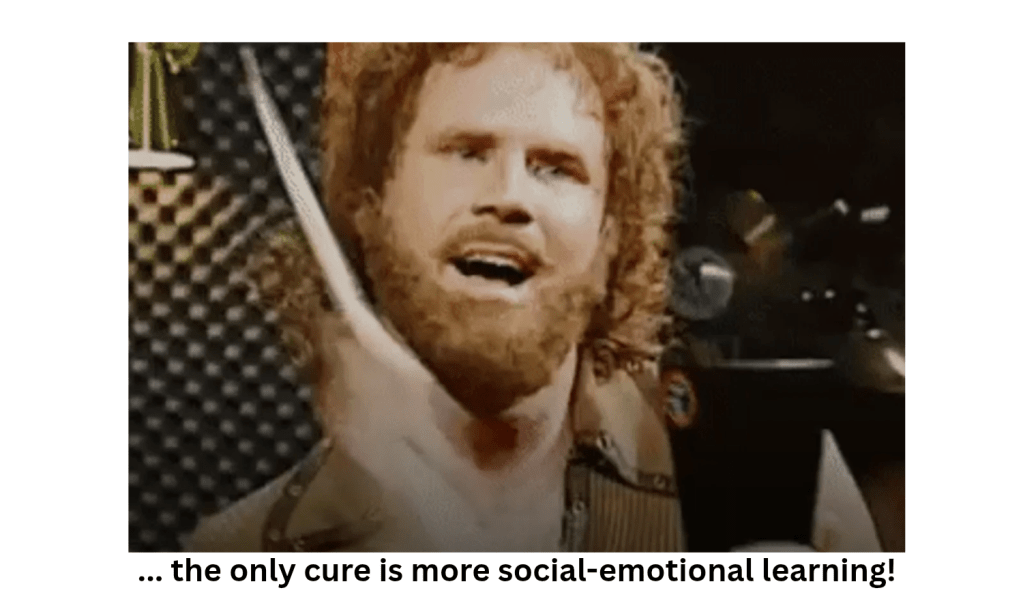
I’m going to be totally honest — I’m obsessed with social-emotional learning (SEL). I’m like Will Ferrell in the famous Saturday Night Live “Cow Bell” Skit — “I’ve got a fever, and the only prescription is more Social Emotional Learning!” Helping children understand and navigate their emotions in social situations is one of the most meaningful parts of my work. During our summer program, I usually strip our schedule down to its essentials, allowing most of the day to unfold through free play. I stay close, guiding children through their social-emotional journeys. As always, the children I serve are as much my teachers as I am theirs — and this summer, one struggling child has taught me something completely unexpected.
I’ve had the honor of working with his family for two years now, and I’m noticing a pattern — he struggled last summer too. So I started digging into my early childhood education toolkit, reflecting on whole-brain learning and following my instincts as an educator to figure out how to help him thrive again. Then it clicked: Too Much SEL.
I thought, “Maybe this child is overwhelmed with all the social-emotional learning that social free-play entails.” So, I tested it out. I began organizing our day a little more, again, planning lessons for those who were feeling ready to engage in that way, many based around one of this child’s special interests.
And it worked! This child has been noticeably more regulated. He has been able to participate, stay grounded, and actually enjoy himself, again. We’re experiencing far fewer behaviors that communicate dysregulation, and he is going home happy, regulated, and ready to return the next day. It’s as if this kiddo charges his batteries with structured, predictable learning, enabling him to engage in free-play with a regulated nervous system. The rest of the group is enjoying this shift too — we all love it when our community is well regulated.
Can open-ended play actually be restrictive for some learners? Could too much SEL impede a child’s ability to behave in a prosocial way?
For this child, that appears to be the case! While many of the children in our program have been flourishing with a summer of structure-free play-based learning, this child — who is neurodivergent and highly capable — is not. He processes the world intensely: noises are too loud, headphones are too itchy, certain words are deeply triggering. And as it turns out, even well-intentioned, play-based social-emotional learning can be overwhelming.
This is fascinating to me because many programs with similar pedagogy lean heavily on free play as a powerful tool for learning. And while that approach works well for many children, open-ended play-based learning can become non-inclusive when it’s out of balance.
Free Play as Social-Emotional Labor
Before this shift, this kid has been telling me that he can’t wait to go home. That was unusual. He usually loves being here. I realized that home might feel safer in part because he can play without the constant weight of social-emotional work. Social free play basically is SEL — children are reading emotional cues, solving conflicts, navigating peer dynamics, and practicing communication. For many kids, that’s fun and fulfilling. But for some neurodivergent children, especially those with high sensitivity or asynchronous development (common in gifted children), SEL and the unpredictability of open-ended play can feel like constant cognitive and emotional labor.
Understanding Processing Needs
Of course, leaving room for the unexpected is a beautiful part of childhood. But for kids with sensory sensitivities or different processing styles, predictability and fewer surprises can make a huge difference. When the environment offers a clear structure and consistent expectations, it reduces cognitive overload — which is especially helpful for children who are hypervigilant or easily overstimulated.
Adding cognitive engagement, such as puzzles, science experiments, logic games, or project-based learning, gives this child a “rest” from the social demands of free play, allowing him to operate in his strength zone — intellectual, academic-based learning.
Whole-Brain Integration
In The Whole-Brain Child, Dan Siegel and Tina Payne Bryson remind us that optimal development happens when both the downstairs brain (emotion, instinct) and the upstairs brain (thinking, planning, reflecting) are engaged in balance. For this child, too much SEL without enough cognitive challenge might be under-engaging the upstairs brain. Adding structure and intellectual focus may actually help him regulate by helping focus his attention and offering a break from social stressors.
Reframing What “Support” Really Means
I’ll be the first to admit that initially, I thought this child needed more SEL. But I was wrong — our program is already full of social-emotional learning. What he needed was a break from it. This realization required me to pause, reflect, and step away from my assumptions about what “support” looks like. I had to ask myself: What if the “problem” is the very environment that I am working to create? What if the SEL that helps many children thrive is the very thing overwhelming this one?
Staying Flexible, Staying Curious
Education is never one-size-fits-all. If we want our programs to be truly inclusive, we have to be willing to reflect and adapt. We must offer choice. We must remain flexible. And we must stay deeply attuned to the unique needs of the children in our care.
This summer has reminded me that SEL is powerful — but it still needs to be balanced, responsive, and thoughtfully applied. Sometimes, the most supportive thing we can do for a child is give them a break from the very tools we treasure most.
 Riverside Forest School
Leave a comment