And is it right for your child?
Forest School can look like a lot of different things. In our area, we have a wide range of outdoor learning opportunities — from homeschool partnerships like Outdoor School through the Mead School District to nature-based playgroups with songs, rituals, and intentional structure. And then there’s Riverside Forest School.
At its heart, “Forest School” refers to a long-term, child-led approach to outdoor education. It emphasizes hands-on learning, supported risk-taking, and deep connection with the natural world. It’s not just about being outside, it’s about using nature as a partner in learning and growth.
At Riverside Forest School, we take that philosophy and root it in strong relationships: with each other, with our community, and with the land we learn on. We believe a sense of belonging is essential to healthy development and to a life full of joy and peace.
Let’s break it down:
Holistic Learning
Forest School focuses on the whole child, not just academics. At Riverside, we emphasize social and emotional development, helping children build tools for healthy, lifelong relationships. We want kids to grow in confidence, compassion, and self-awareness.
Child-Led, Not Child-Run
Learning is guided by the interests and curiosity of the children, with educators acting as facilitators and co-learners. But “child-led” does not mean “child-run.” Kids thrive within boundaries and routines, and benefit from thoughtful curriculum. We balance open-ended play with intentional opportunities to go deeper into what excites them most.
Supported Risk-Taking
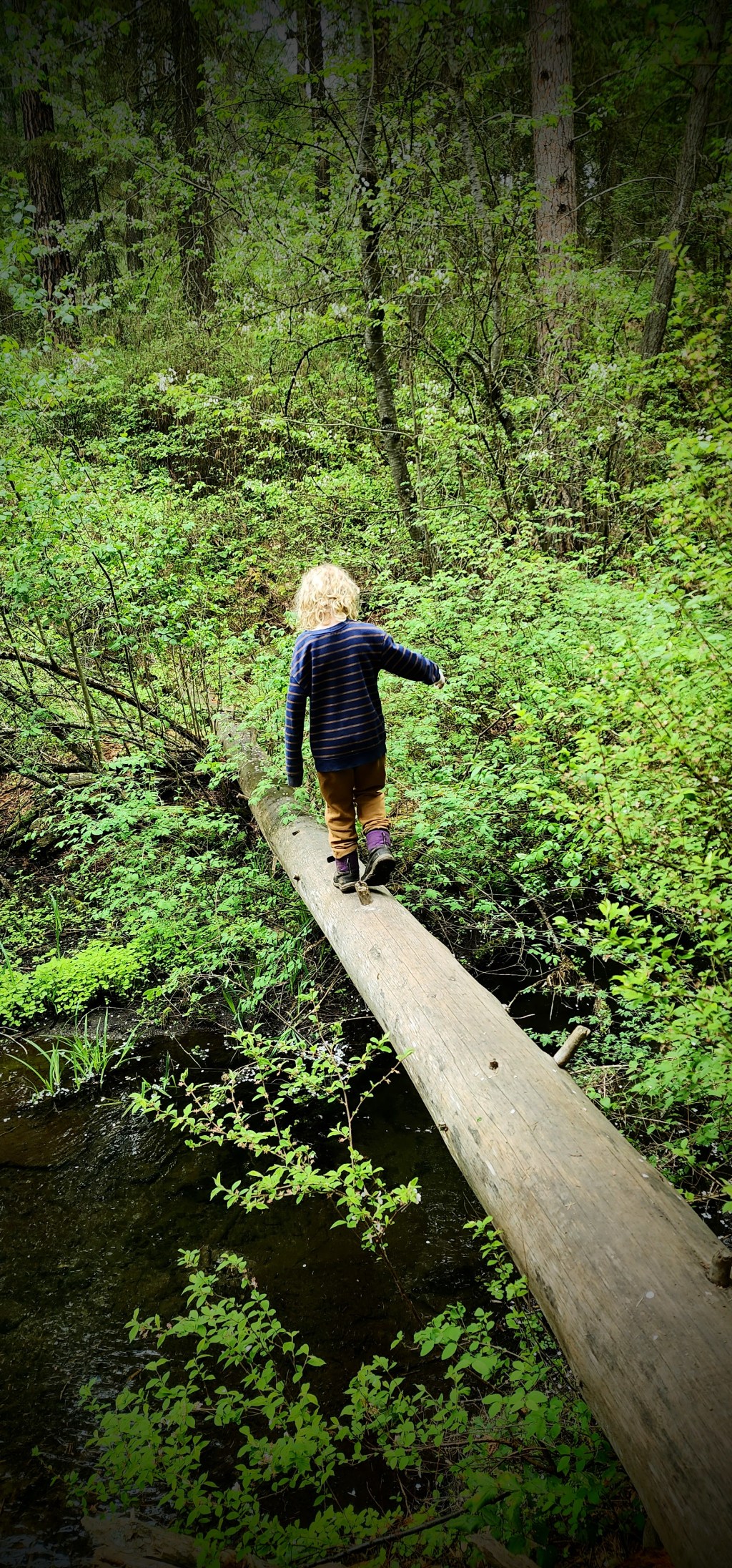
Children climb trees, build forts, and explore uneven terrain. We don’t eliminate risks — we support them. In fact, studies suggest that risk-averse environments can contribute to rising childhood anxiety and that constructive, supportive risk-taking nurtures optimism in children! 1,2
Long-Term Connection
Forest School is not a one-time field trip or seasonal enrichment class. It’s an ongoing journey over months or years. This sustained relationship with a natural space — and with each other — is key to deep learning and emotional security.
Nature-Based
While often based in woodland areas, Forest School can happen in parks, meadows, gardens, and urban wild spaces. We’re working to be based in Riverside State Park and often explore other amazing areas around Spokane!
Community-Rooted
Forest School creates a warm, connected community where children learn with each other, not just beside each other. Families and caregivers are part of that circle too. We invite their voices, values, and gifts into our space.
So… Is Forest School Right for Your Child?
Forest School is a wonderful fit for many families, but it’s not for everyone — and that’s okay.
It may not be a fit right now if:
- Your child feels deeply uncomfortable outdoors and isn’t interested in giving it a try.
- You’re seeking a highly academic, test-prep-focused after-school environment.
- Your family schedule or needs require an indoor, full-time childcare model.
- You’re hoping for a program where children are taught to primarily obey adult directives. (We encourage children to understand rules and boundaries, think for themselves, and form their own understanding of their role in a community.)
That said, I’ve often seen hesitant children blossom in our program once they’ve had time to adjust, build trust, and find their rhythm. If your child wants to be here (even if they’re a little nervous), we’re ready to meet them with care and patience.
Forest School isn’t just a program — it’s a philosophy. And Riverside Forest School is our unique expression of that philosophy here in Spokane. Whether you’re new to the concept or already love the outdoors, we invite you to come learn with us.
Have questions? Curious if it’s a good fit for your family? Reach out. We’d love to connect!
- Brussoni, M., Lin, Y., Han, C. S., & Janssen, I. (2022). Outdoor play and independent mobility: Natural partners in supporting children’s physical activity and healthy development. International Journal of Behavioral Nutrition and Physical Activity, 19, 42. https://doi.org/10.1186/s12966-022-01273-4 — Available via PubMed Central
- Lu, M. S., Hennefield, L., Tillman, R., & Markson, L. (2023). Optimistic children engage in more constructive risk-taking behaviors. International Journal of Behavioral Development. https://doi.org/10.1177/01650254231162485 — Available via PubMed Central
 Riverside Forest School
Leave a comment