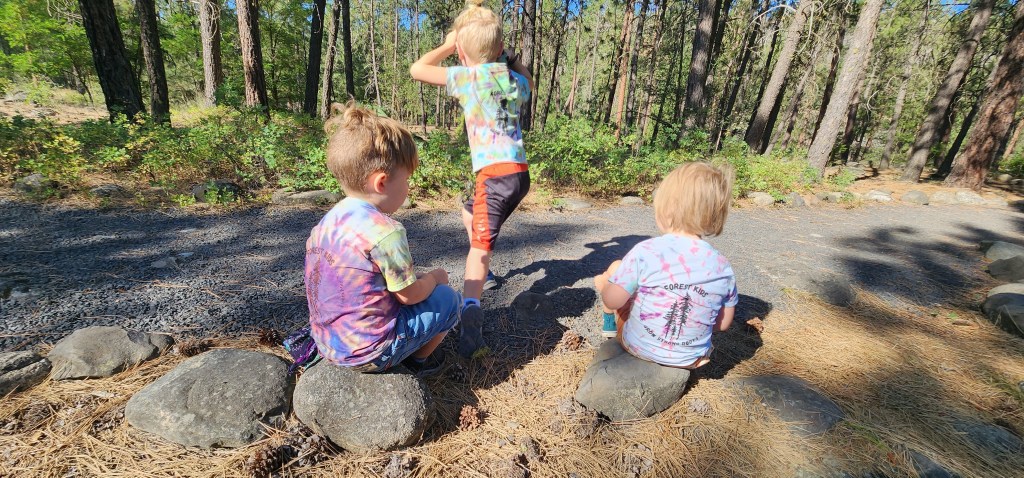
Morning light streams through the treetops reflecting the glittering snow softly falling between branches. The children gather at our picnic table, puffy with snow gear and eyes bright with anticipation. There’s a hum of excitement in the air: this is our first snowy day in the forest this year! The children push snow off the table and begin to ask questions about the world around them. At first glance, it might look like simple play, but what’s unfolding here is a powerful tapestry of growth—physical, emotional, cognitive, social, and creative—all woven together by the natural world.
A little girl decides to walk across a sturdy log, looking for tree sap to take home for her beloved fires. She wobbles at first—arms stretched for balance—yet she keeps going. With each step, her gross motor skills strengthen, and her confidence soars. Nearby, her friend crouches low, scooping pebbles and counting them as he tosses them over the edge of the hill. He’s testing ideas about weight, volume, and sound—deepening his curiosity and problem-solving skills in a setting far more captivating than any classroom worksheet.
Meanwhile, a chorus of voices echoes beneath the branches as new discoveries spark conversations. Children try out freshly learned words like “migrate” and “habitat,” describing the insects and small critters they spot. By sharing these findings, they’re not only expanding their vocabularies but also honing communication skills. Many choose to revisit these moments later in the day—recounting to friends, parents, or in a simple nature journal—turning their adventures into stories and reflections.
The magic of outdoor learning also stretches into social and emotional realms. When one child stumbles upon a stash of pinecones, he calls his friends to join the fun. They soon gather around, collaborating to collect pinecones, rocks, and other nature treasure, pretending to be squirrels preparing for winter. Someone suggests organizing them by type and counting them out. Decisions are negotiated, disagreements are resolved democratically, and empathy grows as they learn to respect each other’s ideas. It’s the same sense of shared purpose that fosters belonging—a key element in helping children feel safe, supported, and confident enough to explore.
A soft breeze carries the scent of cold snow and butterscotch Ponderosa Pines, stirring imaginations to create a tiny town from fallen twigs and small rocks. In these moments, creativity and aesthetic appreciation blossom. Nature becomes both canvas and inspiration, inviting the children to see shapes, patterns, and colors in new ways. Each discovery sparks the next project: measuring snowfall, exploring our senses, the physics of rock skipping.
By the end of each day, dirt smudges on cheeks and bits of moss in hair serve as badges of honor. In every domain—physical, cognitive, social-emotional, language, and creative—outdoor learning has left its mark. It’s more than time spent outside: it’s an invitation to engage with the world on a deeper level. Each challenge tackled or question posed cultivates resilience, wonder, and a love of learning that thrives under open skies. And tomorrow? The forest will be waiting with new trails to wander, new questions to ask, and fresh ways to grow—one step, discovery, and story at a time.
 Riverside Forest School
Leave a comment