How Roles Strengthened Social-Emotional Learning in the Forest
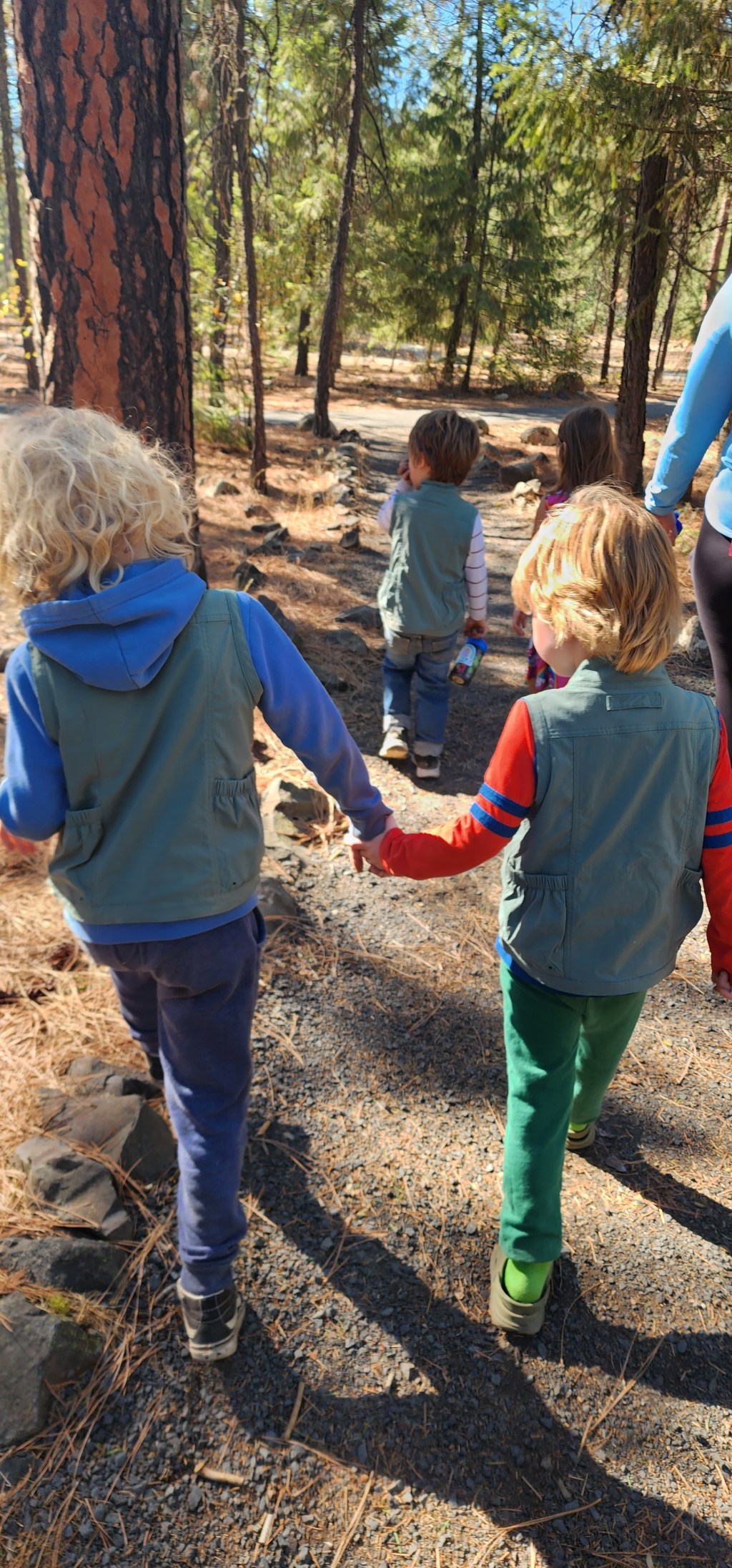
One of the most beautiful (and sometimes most challenging) aspects of early childhood education is helping children learn how to work together. Collaboration isn’t always instinctive—especially in a forest school setting, where freedom and autonomy are core to the experience. When disagreements started arising during our group hikes, particularly about who got to be first in line, my co-teacher, Ms. Tara, saw an opportunity to turn the challenge into a learning experience.
She introduced roles—a simple yet transformative way to help children navigate our daily forest rituals while practicing cooperation. Instead of one leader at the front, we created multiple roles, giving each child a meaningful part to play:
- The Leader ensures our whole group is present and guides us to our destination.
- The Navigator decides how we get there—hopping, skipping, or even doing a silly walk.
- The Morale Booster keeps spirits high, checking in on friends or sharing a joke.
- The Safety Watcher makes sure there are no “purple polka-dot elephants” (or other surprises!) sneaking up behind us.
With just four children in our current forest group, everyone had a role. But something incredible happened: on days when we had more children, they naturally started sharing roles. One day, a child turned to a friend and said, “You can be a navigator with me!”—an invitation to collaborate, to include, and to work together in a way that felt natural and joyful.
At first, this practice was met with resistance. It wasn’t easy, and we even questioned whether we should continue. We didn’t want to impose unnecessary structure that could interfere with the children’s sense of autonomy. But by keeping the role-playing periods short, and ensuring plenty of time for free exploration afterward, we found the perfect balance. Soon, the children began embracing their roles, finding joy in teamwork, and (most importantly) carrying this spirit of collaboration into other parts of their day.
Now, we see them working together more fluidly, not just during hikes, but in play, in problem-solving, in small acts of kindness. The simple act of giving children meaningful roles didn’t just help with group dynamics; it deepened their understanding of what it means to be part of a community. Because when children learn that every role is valuable, that leadership isn’t just about being first, and that we move forward together, they take those lessons with them far beyond the forest trail.
 Riverside Forest School
Leave a comment